For many parents, the first day of preschool feels like a bigger milestone than they expected.
You spend weeks preparing. You buy a backpack, label a water bottle, and talk excitedly about starting school. Then the morning finally arrives, and suddenly everything feels real.
Your child might be smiling one minute and holding tightly onto your hand the next. You might be wondering whether they will settle in, make friends, or remember that you’ll be back to pick them up later.
If this sounds familiar, you’re not alone.
The first day of preschool is a big change, not only for children but for parents too. Every family experiences it differently, and there is no perfect way for the day to unfold.
The reassuring news is that a Montessori preschool is designed to help children feel safe, confident, and supported as they adjust to a new environment. Teachers understand that every child settles at their own pace, and the first day is about building trust rather than rushing into learning.
If your child is about to begin preschool, here’s what you can realistically expect and how you can help make the transition a little easier.
A Calm Welcome Instead of a Busy Classroom
Many parents imagine the first day of preschool as noisy and overwhelming.
In reality, most Montessori classrooms feel surprisingly calm.
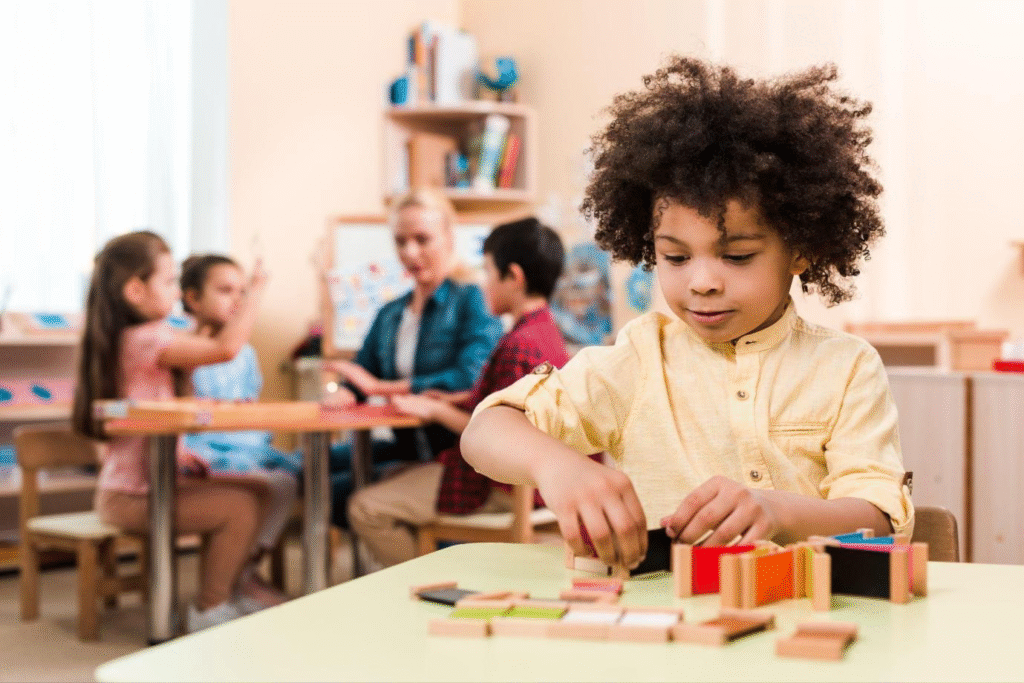
Instead of children rushing from one activity to another, you’ll often notice quiet conversations, children working independently, and teachers moving gently around the classroom.
This calm atmosphere is intentional.
According to the American Montessori Society, Montessori classrooms are carefully prepared to help children develop independence, concentration, and confidence in a peaceful learning environment.
On the first day, teachers are usually focused on helping children feel comfortable before introducing new routines or learning activities.
Your child may spend the first few minutes simply looking around the classroom, watching other children, or exploring materials that catch their attention.
That is completely normal.
The Drop-Off Can Be Harder for Parents Than Children
Let’s be honest.
For many families, drop-off is the part they worry about the most.
Some children walk into the classroom without looking back.
Others cry for a few minutes.
Some happily wave goodbye one day and become emotional the next.
All of these reactions are normal.
One difficult morning does not mean your child dislikes preschool.
In fact, many experienced Montessori teachers will tell you that children often settle shortly after their parents leave.
Rather than focusing on the tears, teachers gently redirect children toward interesting classroom activities, introduce them to classmates, or simply sit beside them until they feel comfortable.
One of the best things parents can do is keep goodbyes short, warm, and consistent.
A simple hug, a smile, and a confident “I’ll see you after school” often works better than staying for a long time or leaving without saying goodbye.
Children feel more secure when they know what to expect.
What Your Child Will Actually Do on the First Day
One of the biggest surprises for parents is that Montessori classrooms do not expect children to jump straight into lessons.
The first day is about becoming familiar with a new environment.
Your child might spend time:
- Exploring classroom materials
- Watching other children work
- Meeting their teacher
- Learning where to put their backpack
- Washing hands before snack time
- Choosing simple activities
- Sitting with classmates during group moments
Teachers observe carefully instead of directing every minute of the day.
For example, a child might become interested in pouring water between two small pitchers, matching picture cards, building with wooden blocks, or completing a simple puzzle.
These activities may look like play, but they are carefully chosen to develop coordination, concentration, and independence.
Rather than rushing children through a schedule, Montessori teachers allow them to become comfortable with their surroundings before gradually introducing more challenging work.
Building Confidence Takes Time
Some parents expect their child to make friends immediately.
Others worry when their child prefers to observe instead of joining in.
Both situations are perfectly normal.
Young children often build friendships through shared experiences rather than formal introductions.
A child may spend several days simply watching another child complete an activity before deciding to join them.
Our experienced montessori teachers support these interactions naturally.
Instead of telling children who they should play with, teachers create opportunities for children to work alongside one another, practise taking turns, and solve small problems together.
Over time, these everyday interactions often grow into genuine friendships.
Every Child Adjusts Differently
One of the biggest mistakes parents make is judging the entire preschool experience by the first morning.
The truth is that adjusting to preschool is a process.
During the first few weeks, your child is learning:
- New routines
- New faces
- Classroom expectations
- Where everything belongs
- That you always come back after school
Some children adjust within a few days.
Others may need two or three weeks before drop-off becomes part of their normal routine.
According to HealthyChildren.org, an educational resource from the American Academy of Pediatrics, temporary separation anxiety and changes in behaviour are common when children experience major life transitions like starting preschool.
You may notice:
- Extra tiredness after school
- Earlier bedtimes
- A little more clinginess at home
- Excitement mixed with nervousness
- New stories about classmates and teachers
These are usually signs that your child is processing a lot of new experiences.
Simple Ways Parents Can Prepare Before the First Day
Preparing for preschool begins before your child walks into the classroom.
Small routines at home can make a big difference.
Here are a few simple ideas.
- Talk positively about preschool
Children often notice their parents’ emotions.
Speak positively about school without creating unrealistic expectations.
Instead of saying,
“You’re going to have the best day ever!”
Try saying,
“You’ll meet your teachers, explore your classroom, and I’ll come back after school to pick you up.”
Simple and reassuring is often more helpful.
- Practise independence
Montessori classrooms encourage children to do things for themselves.
Before school starts, let your child practise:
- Putting on shoes
- Washing hands
- Carrying their backpack
- Cleaning up toys
- Drinking from their own water bottle
These small achievements build confidence.
- Read books about starting preschool
Stories help children understand what to expect.
Reading together also opens the door for conversations about feelings and questions they may have.
- Visit the school beforehand
If possible, attend an orientation or school tour before the first day.
Walking through the classroom and seeing the playground can make everything feel much more familiar.
Stay Connected Without Worrying Too Much
It is natural to wonder how your child is doing throughout the day.
Many Montessori schools, including EverBright Montessori Academy, provide updates through parent communication apps, photos, or daily reports.
These updates help parents feel connected while giving children the space to build confidence independently.
At the same time, remember that children often need time before they start talking about their school day.
Instead of asking,
“Did you have fun?”
try asking:
- What made you smile today?
- Who did you sit with?
- What was your favourite activity?
- Did anything surprise you today?
Open-ended questions often lead to more meaningful conversations.
Remember That Every First Day Is Different
There is no perfect first day.
Some children run into the classroom with excitement.
Others need a few extra hugs before they feel ready.
Neither experience predicts how successful their preschool journey will be.
What matters most is that your child is entering an environment where teachers understand child development, respect individual differences, and support children through each stage of their adjustment.
If you are still deciding which preschool is right for your family, it may also be helpful to read our Complete Family Guide to Montessori Preschool in Chino, CA, where we explain what to look for when comparing schools.
You can also explore our guides on:
- How to Choose the Right Preschool in Chino, CA
- Montessori vs Traditional Preschool: Which Is Better for Your Child?
- What Age Should a Child Start Preschool?
These resources will help you feel more confident as you prepare for this exciting new chapter.
Final Thoughts
Starting preschool is a big milestone, and it is perfectly normal to have questions along the way.
The first few days may come with a mix of excitement, uncertainty, and a few tears, but most children gradually settle into their new routine as they build trust with their teachers and classmates.
With patience, consistency, and a supportive learning environment, your child’s first day can become the beginning of a positive and rewarding preschool experience.
If you’re considering Montessori education and would like to see how children learn and grow at EverBright Montessori Academy, we invite you to schedule a tour. Visiting the classrooms, meeting our teachers, and experiencing the environment in person is one of the best ways to decide if it’s the right fit for your family.