For many parents, deciding when to start preschool feels harder than expected.
Some children seem ready at age two, while others still prefer staying close to home at three or four. It is completely normal to wonder whether your child is ready, or if waiting a little longer might be the better choice.
The truth is, there is no single “perfect age” that works for every child.
What matters most is your child’s readiness, personality, and the type of preschool environment they will be stepping into.
If you have been wondering what age should a child start preschool, here is a practical guide to help you make a more confident decision.
What Is the Best Age to Start Preschool?
For many children, the best age to start preschool is somewhere between 2.5 to 3 years old.
At this stage, children are often beginning to develop important social, emotional, and communication skills that help them adjust to a classroom environment.
They may start showing signs like:
- Curiosity about other children
- Better communication of needs
- More independence during daily routines
- Interest in learning and exploring
That said, age alone should never be the only factor.
Some children are ready earlier, while others simply need more time. Every child develops at a different pace, and that is completely okay.
According to the American Academy of Pediatrics, preschool readiness depends on both developmental growth and the child’s individual personality.
Signs Your Child May Be Ready for Preschool
Instead of focusing only on age, it can be helpful to look for readiness signs.
Your child may be ready for preschool if they:
- Can stay with another trusted adult for a few hours
- Show interest in other children
- Can follow simple instructions
- Are curious and enjoy exploring new things
- Can communicate basic needs, even if not in full sentences
Do not worry if your child does not check every box.
Readiness is not a test. Preschool is also a place where children continue developing these skills.
Many children grow significantly in confidence once they begin interacting with teachers and classmates in a supportive environment.
Does the Type of Preschool Matter?
Yes, it often matters more than parents expect.
The environment your child enters can shape how comfortable and confident they feel during those first few months.
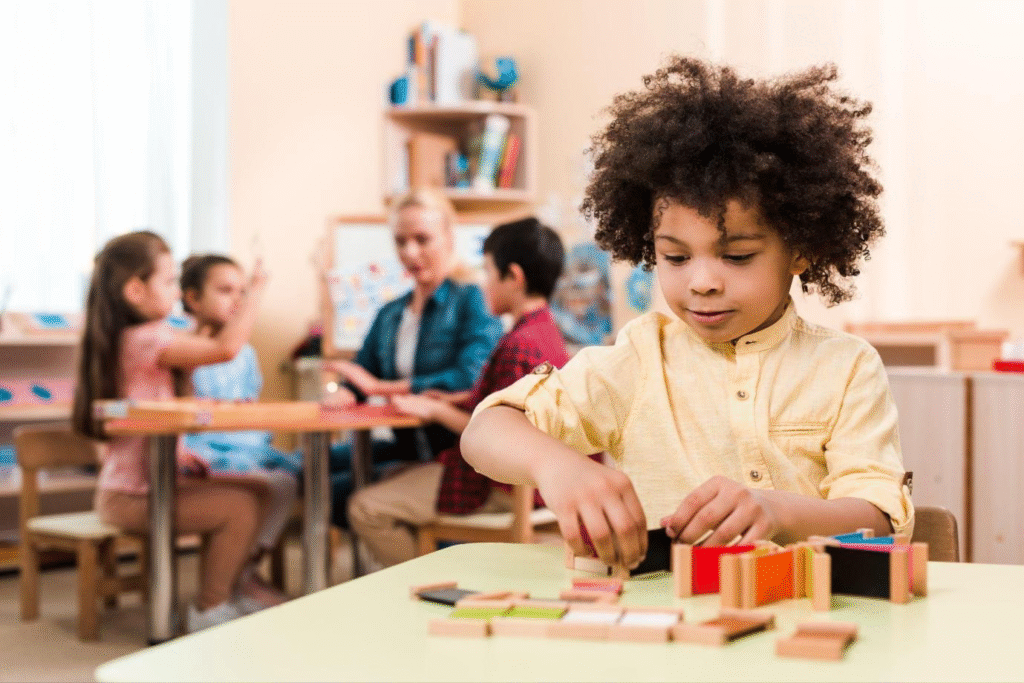
For example, a Montessori preschool often works especially well for younger children because it allows them to develop at their own pace.
Rather than expecting every child to do the same activity at the same time, Montessori classrooms encourage children to explore through hands-on materials and guided independence.
This can feel more natural for younger children who are still building confidence and learning routines.
If you are new to Montessori education, understanding the Montessori philosophy can help explain why many families choose this approach during the early years.
What If My Child Is Under 2.5 Years Old?
Starting preschool earlier can still be a great option, especially when the environment is designed for younger children.
Some families choose early programs because of work schedules, while others simply notice their child is ready for more social interaction and stimulation.
The most important thing is choosing a program that matches your child’s developmental stage.
For younger children, smaller class sizes, nurturing teachers, and a gentle introduction to routines often matter more than academics.
At EverBright Montessori Academy, children can begin as early as 24 months through our Toddler Care program, which is designed to help children gradually build confidence, independence, and comfort in a classroom environment.
What If My Child Starts Preschool Later?
Starting preschool at age four or even later is not necessarily a disadvantage.
Children develop differently, and readiness looks different for every family.
A child who starts later in the right environment may adjust better than a child who starts too early in a setting that does not match their needs.
Rather than worrying about “starting behind,” it may help to ask:
- Is my child emotionally ready?
- Does my child feel comfortable spending time away from home?
- Will the classroom environment support my child’s personality?
Finding the right fit often matters more than starting early.
What to Expect During the First Few Weeks
No matter what age your child starts preschool, some adjustment is completely normal.
Many children take a few weeks to settle into a new routine.
You may notice:
- Some tears during drop-off
- Separation anxiety during the first week or two
- Gradual confidence as routines become familiar
This transition period can feel emotional for parents too.
A caring teacher and consistent routine often make a big difference in helping children feel safe and comfortable.
Many schools also offer parent communication tools to help families stay updated during the adjustment period.
At EverBright, families can stay connected through our Family Communication App, making it easier to understand how children are adjusting throughout the day.
Choosing the Right Preschool Matters
When parents ask when should a child start preschool, the answer is usually less about a specific age and more about readiness.
A high-quality preschool environment can help children build confidence, social skills, independence, and a love for learning during these important early years.
For many families, visiting schools and observing classrooms can make the decision much clearer.
Sometimes, seeing how children interact, learn, and feel in the environment tells you more than any website or brochure ever could.
If you are currently exploring preschool options, you may also find our guide on How to Choose the Right Montessori Preschool in Chino, CA for Your Child helpful when comparing schools and programs.