A Montessori preschool tour gives you the opportunity to experience what everyday learning really looks like. Instead of relying on photos, reviews, or brochures, you’ll be able to observe the classroom in action, see how teachers support each child, and decide whether the environment feels like the right fit for your family.
If you’re visiting Montessori preschools in Chino, Chino Hills, Ontario, or nearby communities, you’ll quickly notice that every school has its own approach. While classrooms may look similar at first glance, the daily routines, teaching style, and learning environment can be very different.
That’s why a preschool tour is about much more than looking at the facilities. It’s your opportunity to observe how children spend their day, how teachers interact with them, and whether the classroom encourages independence, confidence, and a genuine love of learning.
This guide will help you know exactly what to look for, which questions to ask, and how to confidently compare your options before making a decision.
Before Your Preschool Tour
A little preparation before your visit can make a big difference.
Start by thinking about what matters most to your family. Every child is unique, so your priorities may be different from someone else’s. You may be looking for a nurturing environment, strong kindergarten preparation, experienced teachers, or a program that encourages independence.
It’s also helpful to write down questions that are specific to your child, such as allergies, potty training, separation anxiety, or daily routines.
If you’re touring several schools, bring a notebook or use your phone to record your observations immediately after each visit. Small details can easily blur together, and having notes will make comparing schools much easier later.
Whenever possible, schedule your tour during normal classroom hours. Watching children during their regular work cycle provides a much more accurate picture than visiting after school or during a special event.
If you’re still deciding whether it’s the right time for your child to start preschool, you may also enjoy reading What Age Should a Child Start Preschool?
Look Beyond the Classroom
It’s natural to notice beautiful classrooms, colorful decorations, or impressive playgrounds first.
While these are part of the overall experience, they don’t necessarily tell you how children learn every day.
Instead, spend a few minutes quietly observing before asking questions.
Watch the children.
Are they engaged?
Do they seem confident?
Are they moving independently around the classroom?
Then watch the teachers.
Do they speak calmly and respectfully?
Do they encourage children to think and solve problems for themselves?
According to the National Association for the Education of Young Children (NAEYC), one of the most reliable indicators of a high-quality early childhood program is the quality of interactions between teachers and children, along with how actively children participate in learning.
What to Look for During Your Tour
- Children Who Are Engaged in Meaningful Work
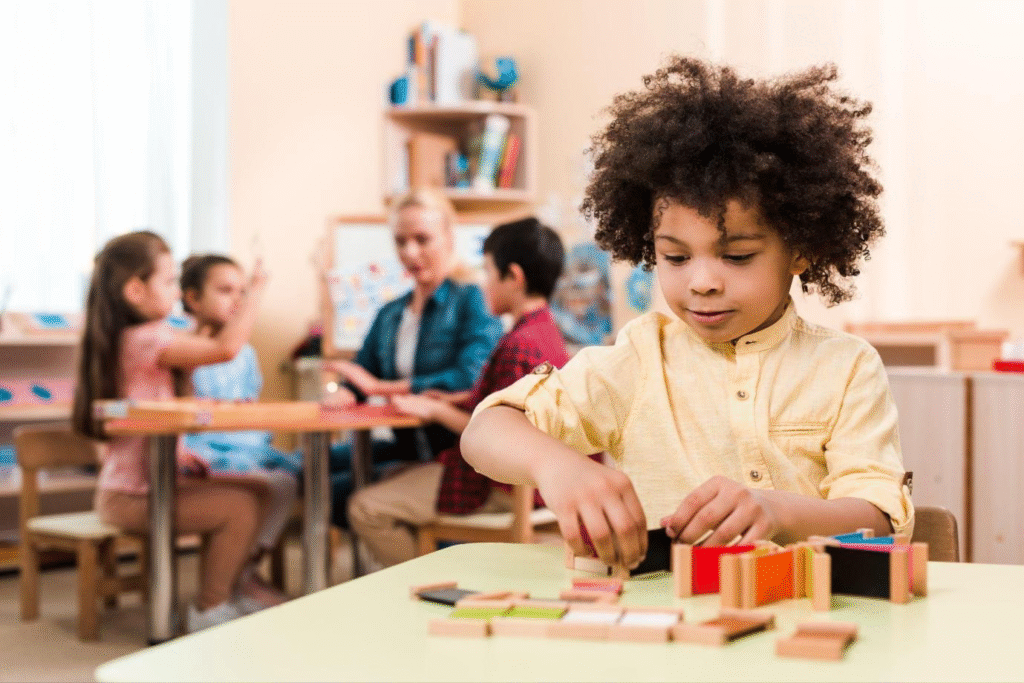
One of the first things you’ll notice in an authentic Montessori classroom is that children are rarely sitting around waiting for instructions.
Instead, each child is typically working on an activity that matches their interests and developmental stage. Some may be practicing Practical Life skills, while others are exploring language, mathematics, or sensorial materials.
As you observe the classroom, ask yourself:
- Are children focused on their work?
- Do they seem interested and motivated?
- Are they choosing activities independently?
- Do they appear confident using classroom materials?
A Montessori classroom doesn’t need to be silent, but it should feel calm, purposeful, and respectful.
At EverBright Montessori Academy, parents often comment on the peaceful atmosphere during our uninterrupted morning work cycle. It’s common to see children working independently, helping one another respectfully, and moving confidently between learning activities without constant direction from adults.
If you’d like a better idea of what a Montessori day looks like, read the articles we explained about what the children’s daily routine in EverBright each day, from arrival to dismissal.
- An Environment That Encourages Independence
Montessori classrooms are intentionally designed to help children do things for themselves.
Look for:
- Low shelves children can reach independently.
- Child-sized furniture.
- Organized learning materials.
- Children returning materials after use.
- Opportunities for children to care for their classroom.
These details might seem small, but they help children build responsibility, organization, and self-confidence every day.
At EverBright Montessori Academy, we encouraged children to choose their own work, complete activities independently, and return materials to their proper place. These routines become everyday habits that often continue at home.
- Teachers Who Guide Instead of Direct
Montessori teachers play a different role from teachers in many traditional classrooms.
Rather than leading every child through the same lesson, they carefully observe each child’s progress, introduce new materials individually, and provide guidance when needed.
As you watch the classroom, notice whether teachers:
- Speak respectfully with children.
- Listen patiently.
- Encourage problem-solving.
- Allow children time to think.
- Move throughout the classroom rather than remaining at the front.
At here, our experienced teachers always spend time observing each child’s interests and readiness before introducing new lessons. This individualized approach allows children to progress with confidence instead of feeling pressured to keep pace with the rest of the class.
- Children Taking Responsibility
Sometimes the smallest moments reveal the most about a school’s culture.
Watch what happens when no teacher is giving instructions.
Do children:
- Put materials away after using them?
- Clean up small spills?
- Wait patiently for their turn?
- Respect another child’s workspace?
- Carry classroom materials carefully?
These everyday routines help children develop patience, independence, and respect for others.
Rather than relying on constant reminders, Montessori encourages children to take responsibility because they understand that caring for their environment is part of being a member of the classroom community.
- Don’t Worry If Every Child Is Doing Something Different
Parents visiting a Montessori classroom for the first time sometimes wonder why children aren’t all working on the same lesson.
In Montessori education, this is intentional.
Each child progresses according to their own readiness, interests, and developmental stage. While one child may be practicing letter sounds, another may be exploring mathematics or preparing a snack through a Practical Life activity.
This individualized approach allows children to build confidence and develop a genuine love of learning without constantly comparing themselves to others.
If you’d like to better understand why Montessori classrooms are designed this way, you may also enjoy reading:
Questions to Ask During Your Tour
Every preschool tour is an opportunity to learn more than what you can see. Asking thoughtful questions helps you understand how the school supports children each day and whether its approach aligns with your family’s expectations.
Here are a few questions worth asking:
- What Montessori training and certifications do your teachers have?
- What does a typical day look like for my child’s age group?
- How do you help new children adjust during their first few weeks?
- How do you communicate with parents about their child’s progress?
- What is the student-to-teacher ratio?
- How do you prepare children for kindergarten?
Don’t feel like you need to ask every question on your first visit. Focus on the areas that matter most to your family and pay attention to how clearly and confidently the staff answer.
Schools that openly explain their daily routines, teaching approach, and parent communication often provide parents with greater confidence throughout their child’s preschool journey.
- Have a Closer Look
Every preschool has its own strengths, and one observation alone shouldn’t determine your decision. However, there are a few signs that may deserve a follow-up conversation.
For example:
- Children appear disengaged or spend long periods waiting for instructions.
- Most activities are teacher-led rather than child-led.
- Learning materials are difficult for children to access independently.
- The classroom feels disorganized or chaotic.
- Teachers give vague answers about Montessori practices or daily routines.
- You rarely see respectful, positive interactions between teachers and children.
A warm and caring environment is important, but an authentic Montessori classroom should also encourage independence, purposeful activity, and self-directed learning.
If something concerns you, don’t hesitate to ask additional questions or arrange another visit before making your decision.
- Compare Schools Before Making Your Decision
If you’re touring several Montessori preschools, it’s easy for the details to blend together.
After each visit, spend a few minutes recording your observations while everything is still fresh in your mind.
You might compare schools based on:
| What to Compare | Notes |
|---|---|
| Classroom atmosphere | |
| Teacher interactions | |
| Child engagement | |
| Independence encouraged | |
| Parent communication | |
| Safety and cleanliness | |
| Outdoor environment | |
| Overall impression |
Looking back at these notes later often makes your decision much easier than relying on memory alone.
- Should You Bring Your Child?
Some parents prefer to visit alone first so they can focus on observing the classroom and asking questions. Others like to bring their child to see how they respond to the environment.
Either approach can work.
If your child joins the tour, don’t expect them to participate immediately. Instead, simply observe how they react.
Do they seem curious?
Are they comfortable exploring with you nearby?
Do they watch other children with interest?
Every child adjusts differently, and a short visit is only one small glimpse of how they’ll feel once they become familiar with the classroom.
Why Visit EverBright Montessori Academy?
Every Montessori school has its own community, culture, and teaching team.
At EverBright Montessori Academy, we encourage families to visit while our classrooms are actively in session whenever possible. This gives parents the opportunity to experience an authentic Montessori work cycle and observe children engaged in meaningful learning.
During your visit, you’ll be able to:
- Observe children working independently across different learning areas.
- Explore our carefully prepared Montessori classrooms.
- Meet our experienced teaching team.
- Learn about our Infant Care, Preschool, and Kindergarten programs.
- Ask questions about your child’s individual needs and development.
Many families tell us that seeing the classroom in person gives them a much clearer understanding of Montessori than reading about it online. Watching children confidently choose activities, solve problems, and care for their classroom often answers questions that no brochure or website can.
Final Thoughts
A Montessori preschool tour isn’t about finding the newest building or the biggest playground. It’s about finding a learning environment where your child feels safe, supported, and inspired to grow.
By observing how children learn, how teachers guide them, and how the classroom encourages independence, you’ll gain a much better understanding of whether the school is the right fit for your family.
If you’re exploring Montessori preschools in Chino, CA, we’d love to welcome you to EverBright Montessori Academy. Schedule a tour to meet our teachers, explore our classrooms, and experience how Montessori learning comes to life every day.