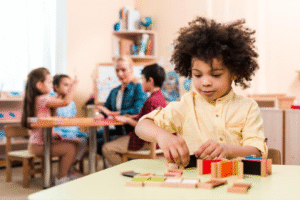
Your child may be excited about starting school, but when it’s time to say goodbye, they suddenly hold onto your hand or begin crying.
For parents, these moments can be difficult. You want your child to enjoy school, but leaving when they’re upset isn’t easy.
Separation anxiety in children is common, especially when they’re adjusting to a new school, unfamiliar teachers, or a different routine.
At EverBright Montessori Academy in Chino, California, we understand that every child adjusts differently. Some settle in quickly, while others need more time and reassurance.
The goal isn’t to stop every tear. It’s to help children gradually feel comfortable, supported, and secure in their new environment.
What Is Separation Anxiety in Children?
Separation anxiety happens when children feel worried or upset about being away from their parents or familiar caregivers.
It’s particularly common in toddlers and preschool-aged children, especially during transitions such as starting school.
According to the American Academy of Pediatrics (AAP), separation anxiety is a normal part of early childhood development.
Common signs include:
- Crying or becoming upset during school drop-off
- Holding tightly onto a parent
- Refusing to enter the classroom
- Asking repeatedly when a parent will return
- Complaining about a stomachache before school
These behaviors don’t necessarily mean your child dislikes school or isn’t ready to attend.
For many young children, being away from familiar caregivers simply takes some getting used to.
Why Do Children Experience Separation Anxiety at School?
Starting school introduces several changes at once. Children meet new teachers, become familiar with different surroundings, and learn to follow daily routines without their parents nearby.
For toddlers, separation can be especially challenging because they’re still developing their understanding of time. When a parent says, “I’ll be back later,” they may not fully understand when that will happen.
Even children who have attended school before may experience separation anxiety after a long vacation, illness, or changes at home.
Every child adjusts at their own pace. Understanding this helps parents respond with patience instead of expecting an immediate change.
5 Ways to Ease Your Child’s Separation Anxiety
A few simple, consistent habits can make school transitions easier for both children and parents.
1. Prepare Your Child Before School Starts
Talk positively and realistically about what school will be like.
Explain that they’ll meet teachers, explore activities, spend time with other children, and see you again at pick-up.
You can also read books about starting school or arrange a school visit beforehand.
The National Association for the Education of Young Children (NAEYC) recommends helping children become familiar with their new environment and caregivers.
Avoid promising that your child won’t feel nervous. Instead, reassure them that feeling unsure about something new is okay.
2. Create a Consistent Morning Routine
Children often feel more comfortable when they know what comes next.
Try to keep mornings predictable by waking up at a similar time, preparing school belongings the night before, and leaving enough time for breakfast and getting dressed.
A familiar routine can help reduce unnecessary stress before drop-off.
If your child hasn’t spent much time away from you, practicing short separations with trusted family members may also help them become more comfortable.
3. Keep Goodbyes Short and Reassuring
When a child cries at drop-off, it’s natural to want to stay until they feel better. However, extending the goodbye repeatedly can sometimes make separation harder.
Try creating a simple goodbye ritual, such as a hug, a kiss, and a reassuring sentence.
For example:
“I love you. Your teacher will take care of you, and I’ll come back after lunch.”
Use a return time that matches your child’s actual schedule.
Avoid leaving secretly while your child is distracted. Saying goodbye helps children begin to understand that separations are temporary.
A short, loving goodbye followed by a consistent return can make the experience more predictable.
4. Communicate With Your Child’s Teachers
Parents understand their child’s personality and what usually comforts them. Teachers can provide valuable insight into how children behave after drop-off.
At EverBright Montessori Academy, our teachers recognize that children have different needs during the transition into the classroom.
Some children may feel ready to begin an activity, while others prefer to observe quietly or receive reassurance before joining in.
Sharing information about your child’s habits, interests, and worries can help teachers understand how best to support them.
Our Family Communication App also helps parents stay connected with classroom updates and communicate with teachers.
5. Be Consistent With Pick-Up Time
Knowing that a parent will return is especially important for children experiencing separation anxiety.
Try to maintain a predictable pick-up routine and explain it in simple terms.
When you reunite, give your child time to reconnect. A hug or a calm conversation about their day can be more helpful than immediately asking lots of questions.
Over time, repeated experiences of saying goodbye and reuniting may help children feel more comfortable with their school routine.
How Montessori Teachers Help Children Adjust to School
Starting school can be a big adjustment, especially for young children who have rarely spent time away from their families.
In Ms. Christina’s classroom for children ages 2–3 at EverBright Montessori Academy, some children initially cry at drop-off, need their teacher close by, or depend on an adult for familiar daily tasks.
Rather than expecting children to become independent immediately, Ms. Christina focuses on building trust and helping them feel safe and comfortable in their new environment.
As children become more familiar with the classroom, she gradually encourages them to take on simple Practical Life activities and daily responsibilities, such as putting away belongings, carrying materials, choosing an activity, and cleaning up afterward.
Over time, we’ve seen children who once needed a teacher beside them throughout the morning begin to settle in more comfortably, follow classroom routines, choose activities independently, and help care for their environment.
At EverBright, independence doesn’t mean expecting children to manage everything on their own. It begins with helping them feel secure enough to try things for themselves.
This approach reflects EverBright’s Montessori Philosophy, which emphasizes respect, independence, and learning through everyday experiences.
Families can also meet our teachers to learn more about the educators who support children at EverBright Montessori Academy.
What If Your Child Keeps Crying at School Drop-Off?
A child crying at preschool drop-off doesn’t necessarily mean they’re upset throughout the entire school day.
Some children become comfortable shortly after their parents leave, while others need additional support.
If your child continues struggling, ask their teacher whether they’re settling into activities, interacting with others, and gradually becoming more comfortable.
There is no fixed timeline for how long separation anxiety lasts.
However, if your child remains highly distressed, develops ongoing physical complaints, or has difficulty participating in normal daily activities, consider discussing their symptoms with a pediatrician.
The American Academy of Pediatrics recommends seeking professional guidance when anxiety interferes with a child’s daily functioning.
Helping Your Child Feel Comfortable Takes Time
Separation anxiety can be challenging, but a difficult goodbye doesn’t mean your child won’t enjoy school.
With predictable routines, patient reassurance, and communication between parents and teachers, children have opportunities to become more comfortable in their new surroundings.
At EverBright Montessori Academy, we recognize that feeling secure is an important part of helping children adjust to school. Some may need extra reassurance at first, while others are soon ready to explore classroom activities more independently.
If you’re exploring Montessori education in Chino, we’d be happy to answer your questions about helping your child adjust. You can arrange a visit to EverBright Montessori Academy to meet our teachers and learn more about our school.